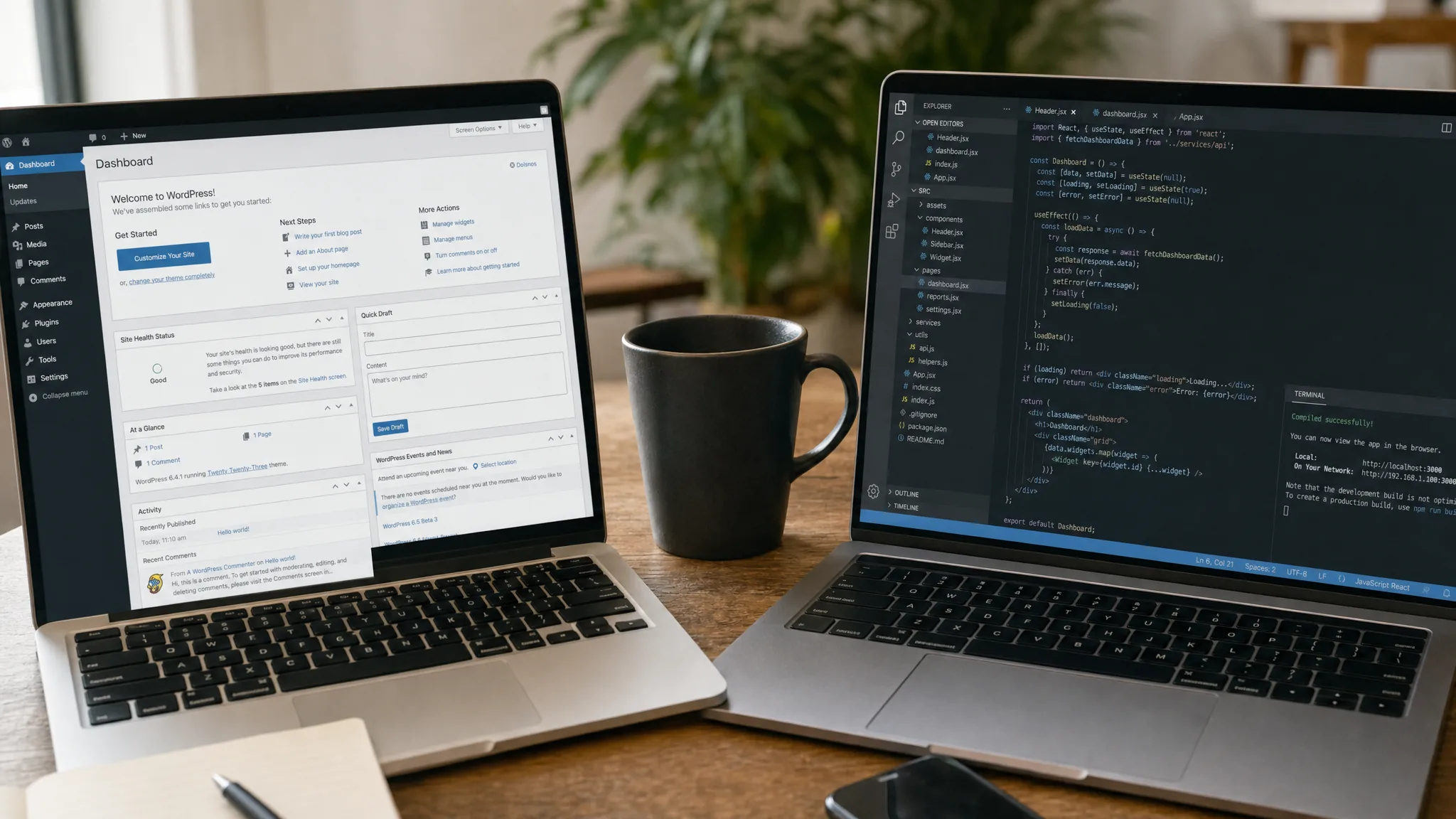








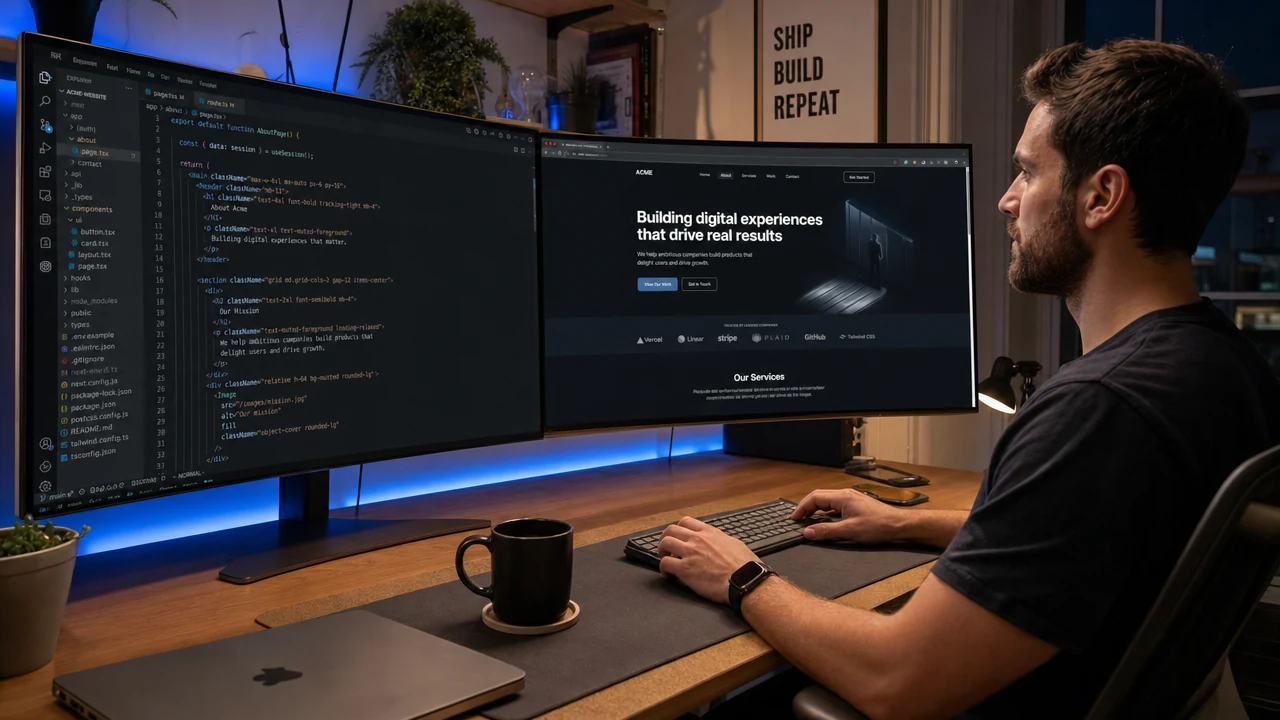
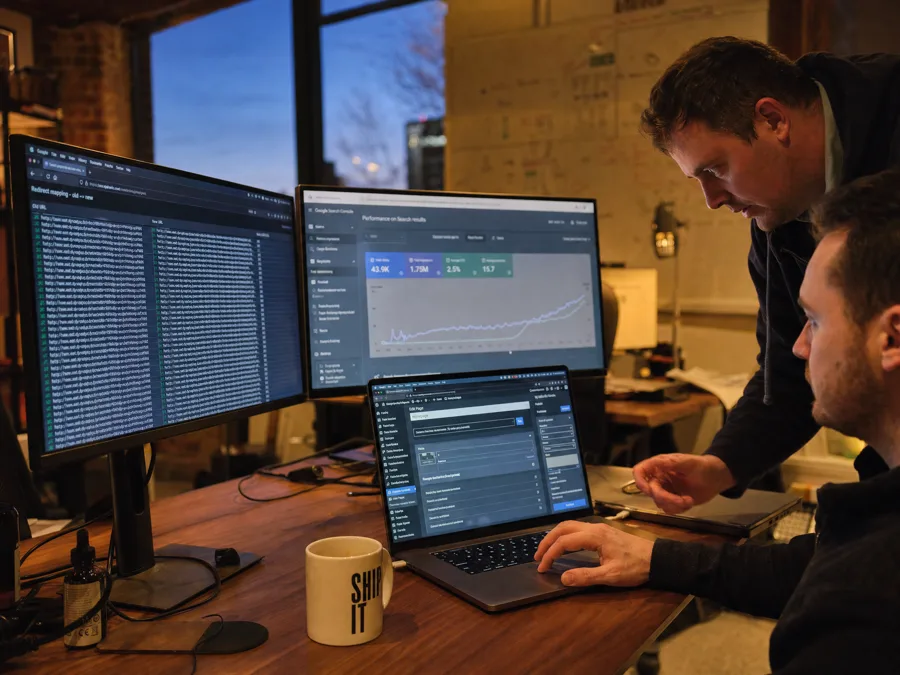

Front-end engineer
Owns the component architecture, writes the pages in Next.js and holds accessibility and the Core Web Vitals budget at code level.
Custom websites, WordPress builds, online stores and web apps for companies that need more than a template — coded from scratch on Next.js or built on a bespoke WordPress theme. Fixed price, one senior team, and code you own.
The stack we build the web on
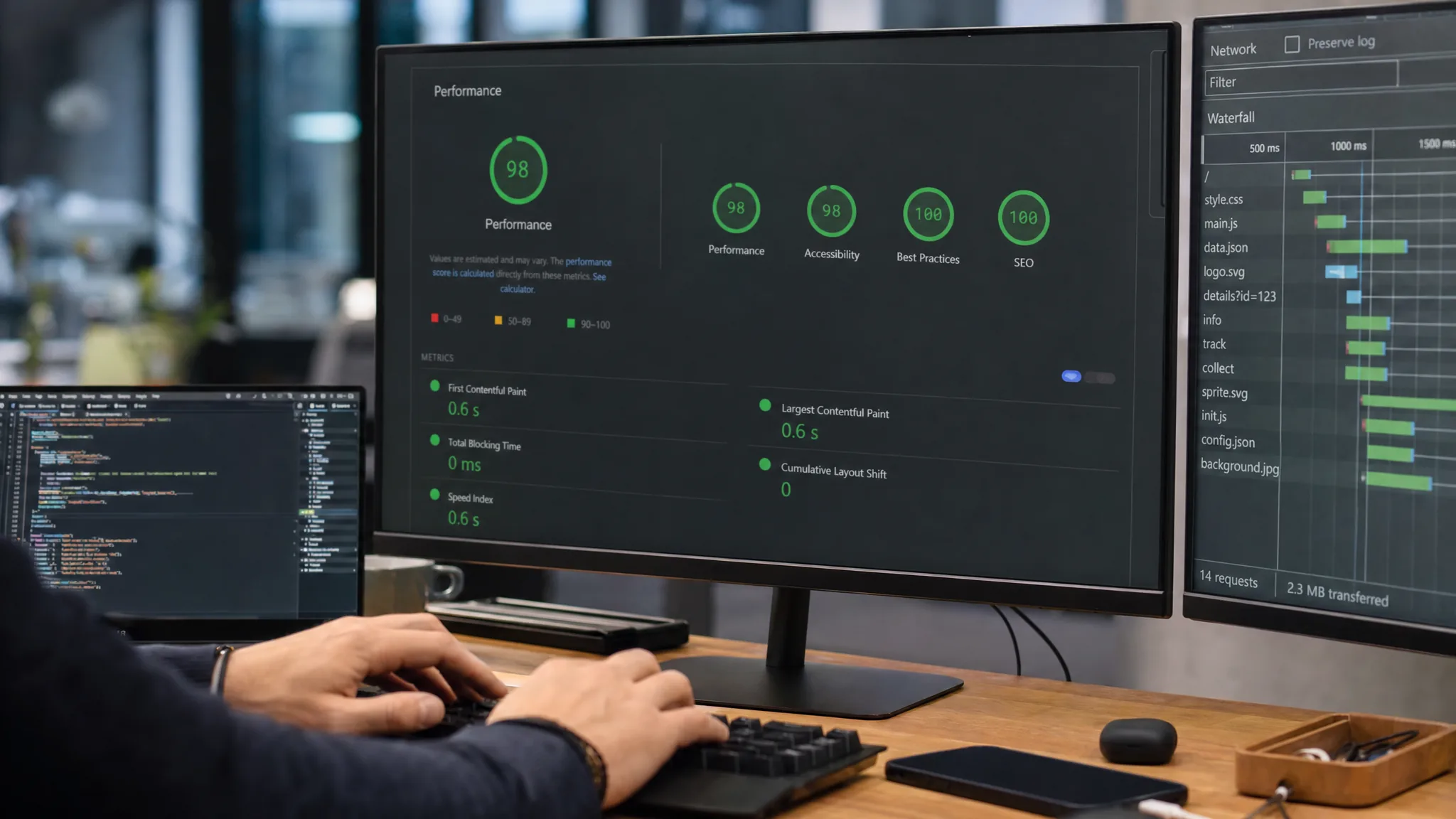
Performance
An off-the-shelf theme ships the code for hundreds of features you never use. The page opens late, shifts on mobile, and search engines and AI answers pass you over.
98
The mobile performance floor on every site we hand over is 95.
0.9s
Each second of delay costs roughly 7% of mobile conversion on average.
410KB
Unused theme code and plugin payload disappear entirely.
← drag · 44% before
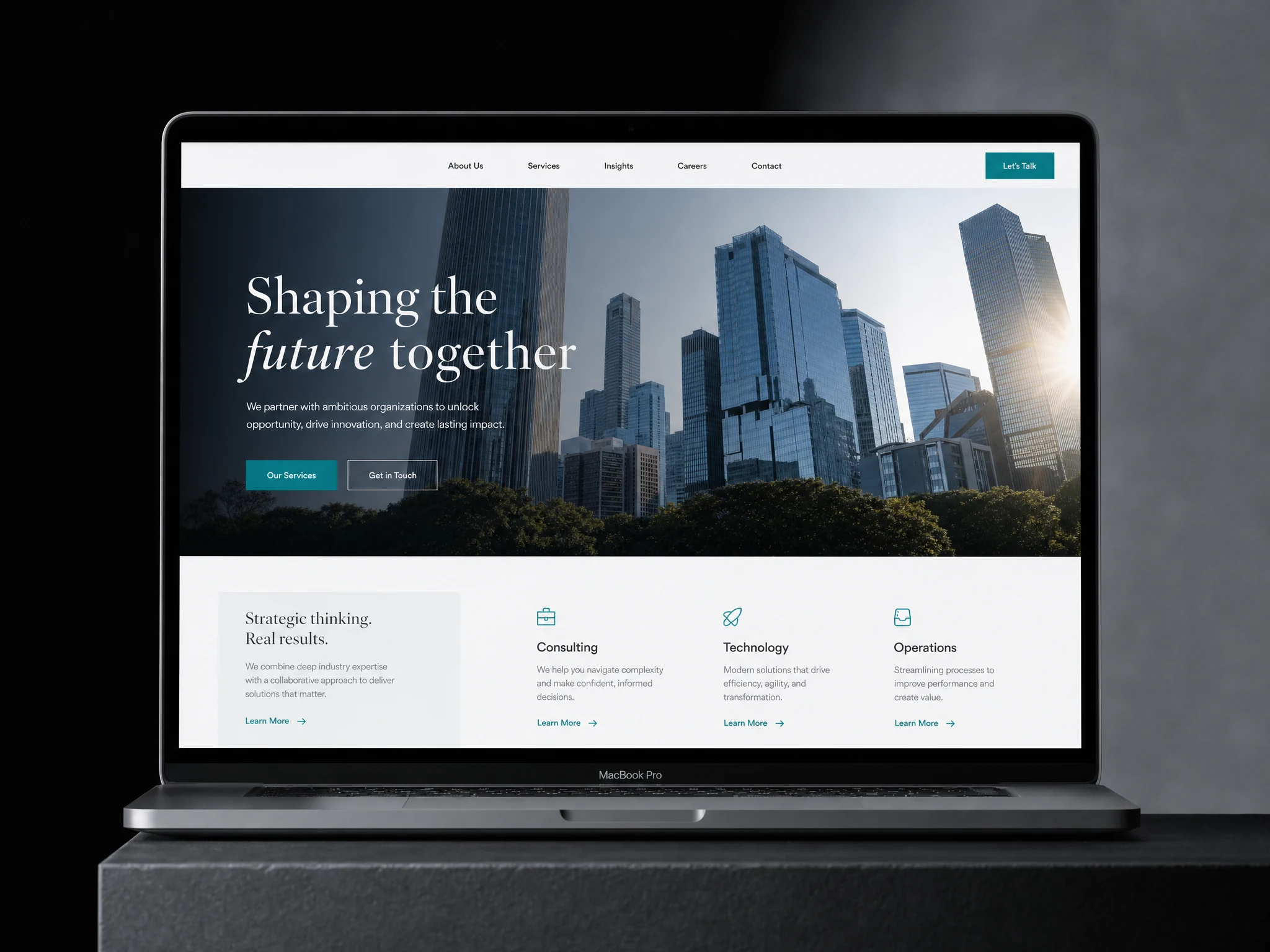
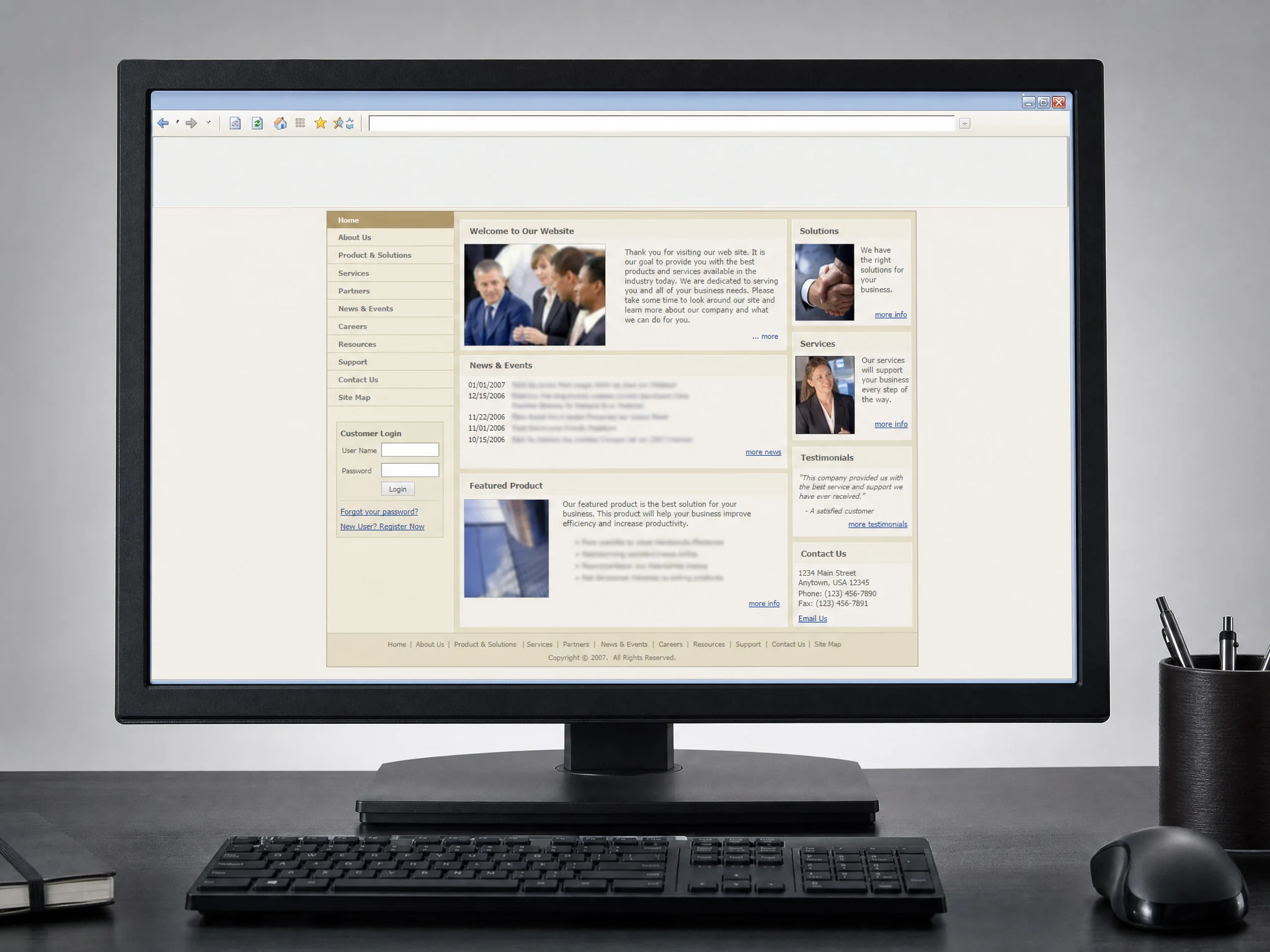
Drag the handle. On the left, the corporate site we took over; on the right, what we shipped six weeks later. The content is largely the same — structure, speed and routing are not.
Client reviews
What we build
Most enquiries land in one of these four. Knowing which one you need is half the scoping conversation.
The site a serious company is judged by. Clear positioning, fast pages, and a structure your team can extend without a developer.
WooCommerce or a custom build — product pages, checkout, payments, shipping and stock wired up and live-tested before launch.
One page, one job: convert. Built for paid traffic with measurement and A/B testing in place from day one.
Authentication, dashboards, user roles and real business logic on Next.js. When a website is not enough and you need a product.
Weight is speed
One second of delay is 7% of mobile conversion.
On the sites we take over the difference comes down to the same two things almost every time: theme payload and code nobody uses. Remove both and the page gets faster on its own.
Scope
As a web design agency we keep every layer in one team — design to infrastructure, content model to measurement. CMS training and documentation are part of the handover, and website pricing is fixed against the scope level at the end of the discovery call.
Process
As you scroll, the browser on the right shows that phase's real output. Each phase ends with your sign-off; nothing proceeds without it.
Audience, search intent and competitor analysis. The page inventory and conversion goals are written down this week.
We do not use lorem ipsum. Design is built on real content from day one, so launch holds no surprises.
We build component by component and open each page for preview on the same infrastructure it launches on. The performance budget is measured on every release.
Old URLs are mapped one by one, so no rankings are lost. Analytics, Search Console and CMS training are part of the handover.

Team
There is no account-manager layer. The senior engineer on your first call writes the code and ships it, so the brief never thins out on its way through anyone.
Owns the component architecture, writes the pages in Next.js and holds accessibility and the Core Web Vitals budget at code level.

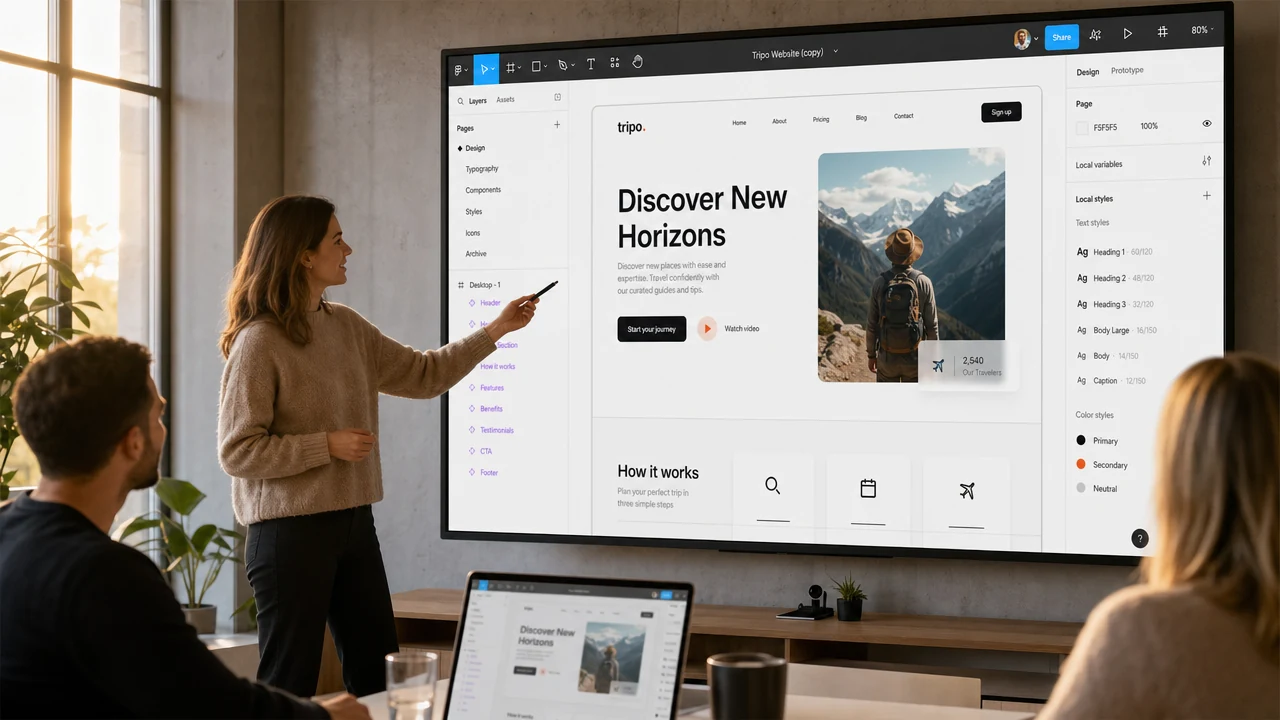
Draws the information architecture and the conversion path, then hands over a design system production can take as-is.

Sets up the data model, the integrations and the deployment pipeline, making the scale and security calls in the first sprint.
Whoever builds it is in the room.
Selected work
Measurement is set up on day one of every project. The figures below are from the sixth month after launch.
B2B manufacturing · 7 weeks
We made product families filterable and cut the quote form down to three steps.

SaaS · 5 weeks
Multilingual structure, automatic hreflang and market-specific pricing pages.

Healthcare group · 6 weeks
Every URL on the old site was mapped; rankings held through launch week.
Packages
Two tracks — custom-coded on Next.js or WordPress — each with three scope levels. The price is fixed after the discovery call and does not change during the project.
Two delivery tracks — pick one
No off-the-shelf theme, no page builder plugin. Server-side rendering with Next.js, a performance budget and a headless CMS. A site that stays fast and carries no plugin dependency.
$600fixed
An 8–12 page corporate website for companies that need to explain themselves clearly.
Design and content
Infrastructure
Measurement and handover
Delivery: 4–6 weeks
Talk about this package$1,150fixed
For teams that want the site working as a sales channel.
Design and content
Conversion
Search visibility
Delivery: 6–8 weeks
Talk about this package$2,300+starting
Not a site but a platform to build a business on: portals, marketplaces, membership systems.
Scope
Integration
Operations
Delivery: scope-dependent
Talk about this packageEvery price is fixed and locked in the contract after the discovery call; it never rises on its own during the project. Hosting and domain accounts are opened in your name and we take no intermediary fee. Prices exclude tax.
Registered office
Registered in Delaware, working worldwide.
Registered office · Dover, Delaware, USA
Frequently asked
If you cannot find what you need, write to us — we reply in 27 minutes on average.
Custom web development means designing and building a website around one company's goals instead of adapting an off-the-shelf theme. The information architecture, copy, integrations and performance budget are planned for that business. At Caliency a custom corporate site is typically 5–15 pages and goes live in 2–6 weeks, depending on the stack.
A corporate site built on WordPress takes 2–3 weeks; a custom-coded corporate site on Next.js takes 4–6; the growth package with a blog and multilingual structure takes 6–8. On platform projects the timeline is settled at the end of discovery.
We build both and make the call with you. WordPress makes sense when your own team will update content often and budget comes first — we write the theme and blocks for the project rather than buying one. When speed, multiple languages, custom integrations or long-term scale come first, a custom-coded Next.js site is the better route.
Page count, how original the design is, the number of languages, integrations (CRM, payments, stock) and the stack decide the price. Our packages start at $325 on WordPress and $600 for a custom-coded corporate site. The price is locked in the contract after the discovery call and excludes tax.
No. We map every URL before launch and set up a 301 redirect map. None of our migrations in the last three years lost traffic permanently.
You can supply the copy, or we can write it against search intent. In the second case the content falls under our SEO and GEO service.
Yes. Editing text, images and adding pages needs no developer — through a headless CMS on coded sites, through the admin panel on WordPress. We run live training for your team and hand over documentation.
A typical corporate site runs on $20–60 a month in hosting. The accounts are opened in your name; we take no intermediary fee.
Yes. We build WooCommerce stores starting at $1,450 or a custom e-commerce stack. Payment provider, shipping, stock and invoicing integrations are part of the scope and are live-tested before launch.
A 30-minute discovery call. You leave it with a clear scope, a real timeline and a fixed price.
Other services
Four disciplines, one team. They usually run together — SEO without a rebuilt site, or GEO before SEO settles, never pays off in full.