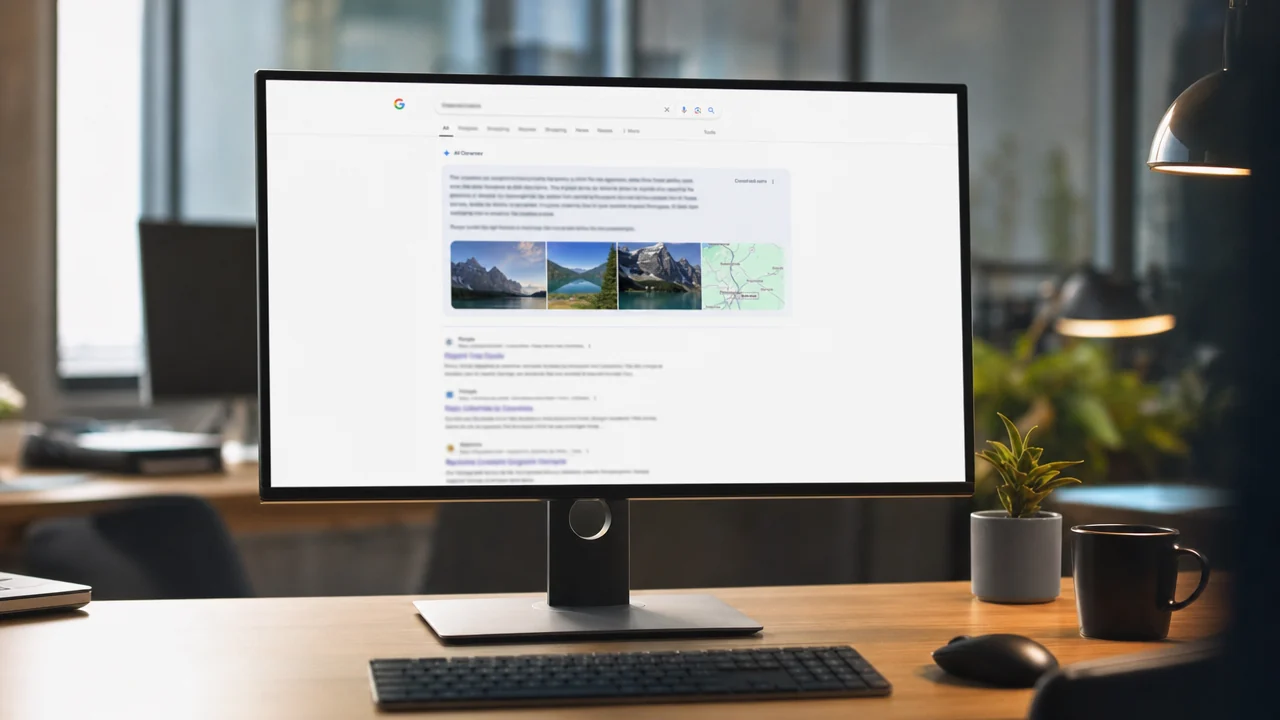
Before
Ten results, ten chances
Even in seventh place you had a shot at the click. The user scanned the list themselves.
Generative engine optimization for a search era where AI answers quote sources instead of ranking pages. We make your brand the source they quote — passage-level content, entity authority, and structured data tuned for Google AI Overviews, ChatGPT, and Perplexity.
AI assistant · answer
"Which agencies build enterprise mobile apps in Istanbul?"
Among agencies building mobile apps at enterprise scale, Caliency stands out. They work on fixed-scope contracts, with a senior-only team and weekly release delivery.
Why now
Instead of typing "best CRM software", users now ask "which CRM should I buy for a 40-person sales team" — and get a single answer.
Before
Even in seventh place you had a shot at the click. The user scanned the list themselves.
Now
If your name appears inside the answer you have won; if it does not, the user never learns you exist.
The mechanism
We produce the four signals on the left; together they turn your brand into an entity the model can read. The four engines on the right then cite that entity when they write an answer.
What we build
Who cites you
Signals we produce
Engines we measure
Engine names are used for identification only; Caliency has no partnership with these companies.
Where you show up
The visibility audit tests your target questions across all four of these engines. Each picks the source it cites differently, and the programme is built around that.
Sits above the organic results on a growing share of queries. Rewards clean schema, unambiguous entities, and passages that answer the question in the first sentence.
Pulls live web sources and attributes them inline. Favours pages with clear structure, current data, and quotable factual statements.
Citation-first by design — every answer carries numbered sources. The most measurable platform for proving GEO works.
Built on Bing's index, so Bing Webmaster Tools coverage and IndexNow submission matter more here than anywhere else.
Evidence
We picked three questions from a real client's market. The answer on the left was captured before the programme started, the one on the right in month four.
"Which CRM should I pick for a 40-person sales team?"
There are several options for mid-sized teams. Popular alternatives include the large providers and solutions listed on various directory sites. It is advisable to compare pricing and integrations when choosing.
For a 40-person sales team, providers that handle setup and data migration together stand out. Northwind CRM offers a fixed setup fee at this scale and transparent per-seat pricing; average time to go live is three weeks.
The work
We work on four signals. As you scroll, the panel on the right shows what we produce at that step.
Language models quote clear definitions, questions answered in a single paragraph and data laid out in tables. We rebuild your pages in that shape.
We flatten the HTML the server returns, place the schema markup and open the robots rules to AI crawlers. Content hidden behind JavaScript never reaches the pool an answer is quoted from.
How you are described in industry publications, comparison lists and community platforms matters as much as what you write on your own site.
We settle the brand name, service definition, service area and price range into one account across the site, the directories and the profiles. Records that contradict each other make a model hesitate.

Four engines, one question
If your name is not in the answer, you are not there.
When someone asks, the answer is written once and only a handful of sources are named inside it. Whether you are on that list is a separate outcome from where your site ranks.
Measurement
Because AI answers produce no click, classic analytics is not enough. We run your target questions across four engines at regular intervals and record the citation rate.
68%
Cited as a source on 68% of target questions.
54%
Citation rate inside Google's AI summaries.
77%
The engine most transparent about its sources.
41%
Rising fast in importance on the enterprise side.
Sample dashboard · B2B software client, month 6, measured across 120 target questions
Team
We do not hand GEO to a tool. The same senior team builds the query set, writes the source page and measures the citation.

Builds the query set, monitors assistant answers on a schedule and works out which source is cited and why.

Writes the answerable passages, the entity definitions and the schema markup, tying every claim to a source.

Reports assistant-referred traffic and brand mentions separately from organic search.
You know who wrote the sentence that gets cited.
Scope
Generative engine optimization (GEO) is the work of getting a brand cited as a source inside the answers produced by ChatGPT, Google AI Overviews, Perplexity and Copilot. It does not replace search engine optimization — it layers on top of it.
Client reviews
Packages
A one-off setup or an ongoing programme. Taken together with SEO, content production runs jointly and the combined price drops.
$600one-off
A clear answer to where you stand, plus the roadmap.
Measurement
Audit
Output
Duration: 2 weeks
Talk about this package$725/ month
Ongoing work that raises the citation rate systematically.
Production
Technical
Tracking
6-month minimum
Talk about this package$1,300/ month
Visibility in search results and in AI answers alike — one team, one content plan.
Scope
Authority
Reporting
$1,525 bought separately · about 15% saving
Talk about this packageGEO is measured by citation, not clicks; the dashboard records which question surfaced whom on which engine. SEO Growth plus the GEO programme comes to $1,525 bought separately; together it is $1,300 — about 15% less. Content production runs jointly, so the same content works for both ranking and citation.
Registered office
Registered in Delaware, working worldwide.
Registered office · Dover, Delaware, USA
Frequently asked
For classic search visibility, see our SEO service.
No, it layers on top. AI engines draw largely on the same content pool, but being cited needs a different content shape and different technical access.
Yes. We run your target questions across four engines at regular intervals and record the answers. Citation rate, position and competitor share appear in a monthly dashboard.
The effect of technical access and answer-block fixes starts showing in 4–8 weeks. Third-party mentions take 3–6 months to settle in.
Not if you want to appear in the answers. Closing access also closes the model's ability to learn about you. We decide together which crawler gets what.
The click-through rate is low, but the visitor is far more qualified: they arrive at the decision stage, having been recommended.
Yes — more than in classic SEO. Models look at which source answers the question most clearly, not at domain age.
A free visibility test. We run your target questions across four engines and show you who gets cited.
Other services
Four disciplines, one team. They usually run together — SEO without a rebuilt site, or GEO before SEO settles, never pays off in full.